The Fascination of the Unpredictable in Industrial Techno
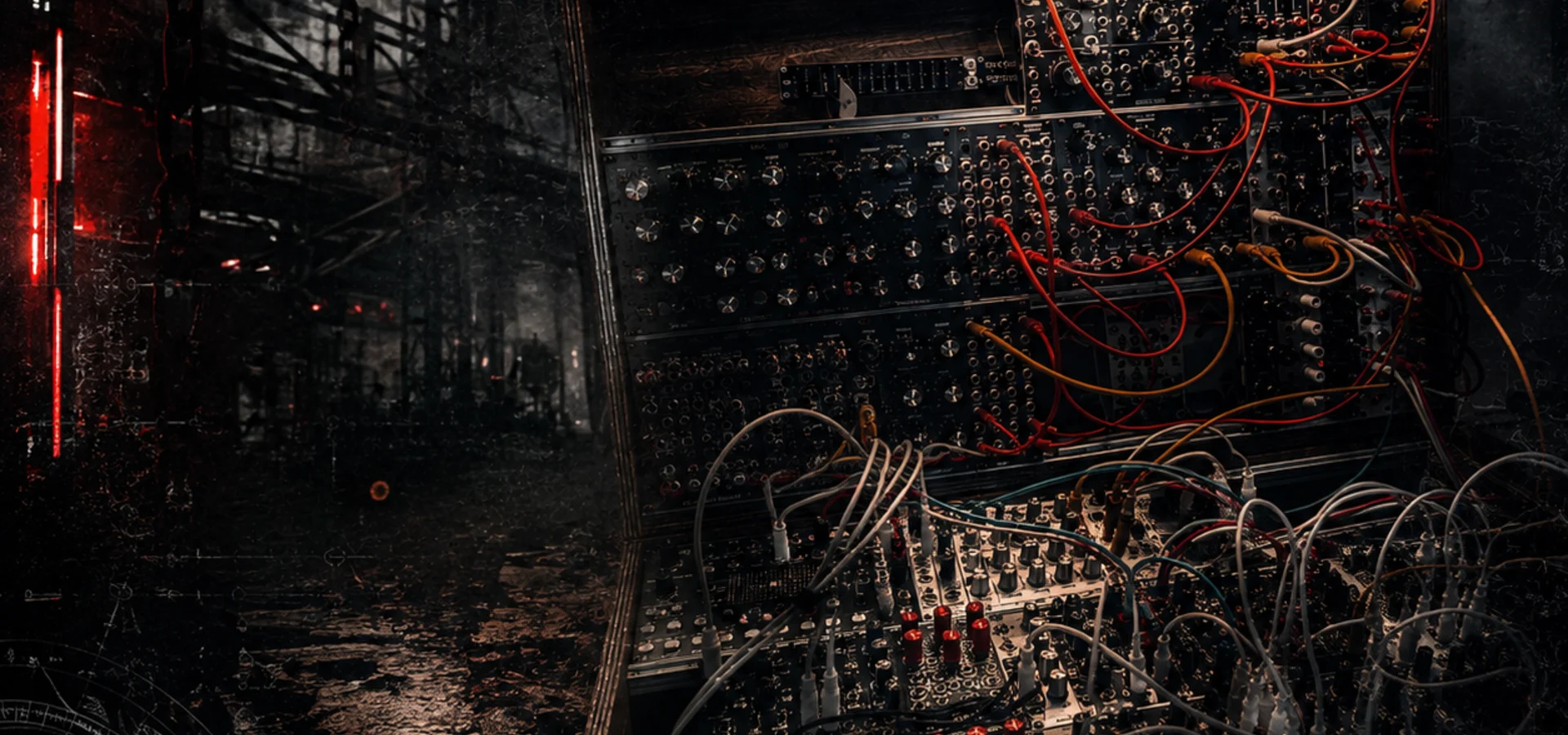
In the harsh cosmos of industrial techno, polished perfection is rarely the goal. Instead, raw textures, metallic sounds, crushing basslines, and an almost mechanical force dominate. Producers seeking to bring this aesthetic to the stage often hit creative walls with traditional DAW setups or rigid grooveboxes. This is precisely where modular synthesizers and the Eurorack format shine, offering the ability to sculpt sounds from scratch and treat electronic music as an organic, fluid process.
A modular system is not an instrument in the traditional sense where you simply press a key and recall a preset. It is an open network of independent modules for sound generation, modulation, filtering, and effects processing. In a live context, this means that every patch cable plugged or unplugged fundamentally alters the sonic foundation. This creates an immediate physical connection to the music that the audience can feel.
Why Eurorack and Semi-Modulars Fit Live Performance
For industrial techno, unconventional control options are particularly exciting. Complex rhythms can be built using hardware sequencers, while chaotic modulation sources like sample and hold, noise generators, or function generators ensure the sound continuously evolves. Nothing sounds static for hours on end. Sequences can be transposed live, gates manipulated, and filters driven to self-oscillation.
Devices like the Moog Mother-32 exemplify how to enter this world. As a semi-modular system, it offers a solid core architecture that functions without patch cables, yet opens up completely via its patchbay for integration into larger Eurorack setups. This allows producers to blend classic synth lines with modular chaos without needing to transport a massive, fully custom system.
The Flip Side: Limitations in Rough Club Environments
As appealing as this creative freedom is, the challenges during live performances are uncompromising. Modular systems are notoriously vulnerable to transport wear, loose connections, and grounding issues. A poorly seated cable at the wrong moment can kill the master output or abruptly halt a powerful sequence. Furthermore, pure live patching requires a high level of routine and concentration under club conditions.
- No preset memory: What sounded great in rehearsal must be rebuilt live in the club.
- Space and weight restrictions when traveling.
- High costs for specialized modules and cabling.
What Beginners Should Keep in Mind
Those taking the plunge to build their first live rig should avoid starting with a massive system. A scaled-down modular approach is much wiser: a solid master clock generator, an expressive sequencer, a flexible sound source, and an aggressive filter form the foundation. Understanding how control voltages and audio signals interact keeps you in control of your sound chaos.
Relevant gear
- Moog Mother-32
Discover equipment at Thomann →
Advertising / affiliate link: If you shop at Thomann through this link, Tecknoid303 may receive a commission. This does not change the price you pay.